


Teachings

Beast or Beauty?
In this week’s sermon, we follow Jesus into the temple courts of Mark 12:38–44, where He exposes a surprising contrast—a “beauty and the beast” moment hidden in plain sight. While the religious elite look impressive, polished, and powerful, Jesus uncovers the beastliness within their inflated spiritual reputation. And while a poor widow slips in unnoticed, offering two insignificant copper coins, Jesus reveals the breathtaking beauty of her wholehearted devotion.
This sermon invites you to rethink what it means to be spiritually rich or poor. Are you a beastly somebody—admired, accomplished, respected on the outside while quietly drifting from the heart of God? Or are you a beautiful nobody—overlooked by the world yet fully seen, valued, and honored by Christ?
Together we explore:
Jesus’ sharp warning about religious influence misused for personal gain
The danger of appearing spiritually strong but being morally bankrupt
The widow’s radical generosity—why her tiny gift meant more than all the wealthy offerings combined
How God measures beauty, worth, and devotion so differently than we do
Why the kingdom of God lifts the lowly and humbles the proud
Filled with vivid storytelling, honest self-examination, and hope for anyone who has felt unseen or insignificant, this sermon reminds us that God treasures integrity, humility, generosity, and faithfulness—not status, appearance, or applause.
If you’ve ever wondered whether your small acts of faith matter, or worried that you don’t measure up to the “spiritual somebodies” around you, this message will assure you:
God sees you. God values you. And in His kingdom, the beautiful nobodies come first.
Not Enough
What does God really want from us—and why do our best efforts still fall short?
In this episode, we explore Jesus’ conversation with a curious scribe in Mark 12:28–34, where the greatest commandment is distilled into something simple, yet impossibly demanding: Love God with all you are, and love your neighbor as yourself.
Through practical reflections and honest questions, we look at what it means to love God with your heart, soul, mind, and strength—and why even our most devoted attempts can leave us feeling empty. The problem isn’t that the commands are unclear. It’s that they’re not enough to bring us into the Kingdom on their own.
This episode dives into:
Why clarity matters when understanding God’s Word
How to love God with your emotions, identity, thoughts, and actions
Why loving your neighbor is inseparable from loving God
What Jesus reveals about the limits of religious effort
Why receiving God’s love must come before giving love away
The difference between loving because you want to be loved and loving because you already are loved
With vivid illustrations, real-life application, and a heartfelt call to receive the love of Christ, this message offers hope to anyone who feels like they’re trying hard but still coming up short.
If you’ve ever wondered, “Am I doing enough?”—this episode will help you see the better question:
“Have I let Jesus love me first?”
Rules Without Relationship
Some people think that Christianity is all about the rules. God just tells us what to do, and it is too hard. Who would want to worship a God like that? Where do they get that idea from? As we continue our series called "Tested" we find that perspective was also quite common to some of the sects of Judaism in Jesus' day. But Jesus sets them straight. Faith in God is not about keeping all the rules and then you die. It is about a relationship with God that starts right now and lasts forever. When we die, God receives us into an even more glorious future life than we experience now. God has loving future intentions towards us that are beyond our imagination. If we miss the relationship with God part, and his loving good intentions, our view of God will shrivel into the concept that God is just an unhappy rule maker. Even from the beginning of the Bible, God has shown himself to be a God who gives those who trust him the more amazing lives than they could ever imagine.
Jesus in the Political
We continue our series about Jesus in Jerusalem called "Tested." Have you ever felt uncomfortable because of a difficult political conversation you became involved in? Welcome to the life of Jesus. In this Sunday's scene in Mark 12, Jesus gets dragged into a hot political debate of his day. It is an attempt to trip him up and get him to say something he might regret. Some things haven't changed all that much in 2000 years. But Jesus surprises everyone when he doesn't get tricked. God's kingdom is much greater than the Roman empire and it's authority over Israel. Their view of the political landscape was too small and too narrow. Even the pagan rule of Caesar didn't threaten the Lord Jesus. As we consider how Jesus answered his opponents, perhaps we can gain a different perspective on our modern-day political landscape. Come and see
The Leader God Wants
In our "Tested" series this week, Jesus tells a story to make his point. It is a hard story to receive. God is disappointed with those in leadership over his people. He has been for a long time. Things are about to change. He has a new leader in mind, a better leader. A godly leader is a leader who is yielded to God, not just a person in charge of people for God. It doesn't matter whether you lead a church, a business, a ministry, an organization, a tea, a peer group or a household. Being a godly leader will make you a better leader. Come see why this Sunday.
Fighting for Real Worship
We continue our new series called "Tested." We will look at the scene where Jesus was very angry in the temple and was confronted about it by the Jerusalem religious authorities. What made him so mad? Who said he could "cleanse" the temple? For Jesus, it was about worship. He wanted people to have access to worship the one true God. And he wanted those who professed to know God to focus on true worship and not just the mechanics of worship. If worship matters to you, you will understand what Jesus was concerned about. If your perspective or your experience of worship is a little off, he will help you with that too. As we gather this Sunday, pray that we share the worship focus of our Savior.
Who’s Testing Whom?
This Sunday we begin our new series entitled "Tested." We will be looking at scenes from the life of Jesus in Mark 11-12 when Jesus entered Jerusalem. The first one is a head scratcher. Jesus curses a fig tree and it withers up and dies. What is that about? Then he tells us that if you pray for God to move a mountain, he will answer you, as long as you forgive those you have something against. We see that something is withering, but mountains are being moved. It is fascinating to consider what Jesus is doing and saying. If you're curious, you will be challenged. Bring your curiosity with you to church. See you there.

Financial Joy
In this week’s message, Your Best Life Ever Now: Financial Joy, we explore Philippians 4:10–23 and discover Paul’s surprising approach to money, contentment, and generosity. Through personal stories and biblical insight, we learn how contentment isn’t something we feel—it’s something we learn as Christ strengthens us. Paul shows that joy doesn’t come from having more, but from trusting God with our needs and resisting the pull of coveting.
We also see how generosity reflects the very heart of God. The Philippians’ sacrificial giving becomes a model for us, reminding us that when we give, we participate in God’s own generosity toward the world. Living with contentment and generosity frees us from fear and opens us to the joyful life God intends.
This message invites us to trust God’s provision, practice gratitude, and live generously in a culture obsessed with more.
The Winding Road to Joy
In this episode of Your Best Life Ever Now, we explore Paul’s vision of joy in Philippians 4:1–9—a joy that grows along the long and winding road of real life. Paul shows us that joy isn’t a quick fix or a burst of emotion; it’s a deep, steady character shaped by God as we walk with Him.
We look at three surprising places where joy takes root: the struggle for unity, the battle with anxiety, and the renewal of our minds. Paul calls us to work toward unity by extending grace and giving others the “generous interpretation.” He teaches us to confront anxiety through prayer, gratitude, and surrender—trusting God with what we cannot control. And he invites us to intentionally shape our thought life, choosing what is true, honorable, and life‑giving instead of letting the world’s algorithms disciple our minds.
Joy, Paul reminds us, is not a shortcut or a switch we flip. It’s the byproduct of a Christ‑centered, spiritually disciplined life—one shaped by community, prayer, Scripture, and daily choices that align our hearts with God. As we walk this winding road with Him, we discover that joy is not just possible—it’s already growing within us.
Jesus and My Past, Present, & Future
In this week’s message, Paul invites us into a radically freeing way of seeing our past, our present, and our future through the lens of faith in Jesus. Whether you feel weighed down by old wounds, overwhelmed by today’s pressures, or anxious about what lies ahead, this passage offers a hope-filled path forward.
Paul shows that faith in Jesus frees us from the grip of the past, not by erasing our memories but by reframing them through the grace of Christ. He reminds us that faith also humbles us in the present, helping us accept our imperfections, lean on community, and remember where we truly belong—citizens of heaven. And finally, he lifts our eyes to the future, where faith empowers us with purpose, confidence, and the promise of resurrection.
If you’ve ever wondered how to live with peace in your story, strength in your struggles, and hope in your tomorrow, this message offers a deeply practical and deeply encouraging perspective. Discover how trusting Jesus reshapes every part of life—and leads you into your best life ever now.
What God Did for Me
In this message from Philippians 3:1–11, we explore one of Paul’s most personal reflections on what it truly means to belong to Christ. Is Christianity about what we do for God—or what God has already done for us? Paul’s answer reshapes everything.
Through his own story, Paul shows why religious performance can never earn God’s approval, why our best efforts still fall short, and why the righteousness we need can only come through Jesus. This sermon walks through four life‑changing truths: it’s not what we do for God, it’s what Christ has done for us; we must give up confidence in ourselves; and in Christ we receive the power of resurrection for everyday life.
If you’ve ever felt exhausted trying to be “good enough,” or wondered how faith actually brings joy, this passage offers clarity, hope, and freedom. Discover how believing the gospel—not striving harder—leads to your best life ever now.

The Mission of Jesus
We begin the New Year thinking about "The Mission of Jesus." As a traveling rabbi, Jesus gathered large crowds and he told them stories that they could identify with in order to point them to the truth about himself. We will look at a well known one, the parable of the sower. Our reading helps us understand Jesus' Method, Message and How the Message Would Spread. As we think about our future as a church heading into 2026, it is really helpful to focus on Jesus, what he was about. How does this translates into our mission and ministry as a local congregation? We will see.

State of the Church 2025
On the final Sunday of each year, I like to take my teaching time to reflect on the life and ministry of our faith family. I am so grateful for each person who worships and serves at West Church. The ministry is a huge team effort, and you make it a joy. What are some of the high points of our year? What are some of the challenges we face and need to prepare for? As we ring in 2026, we pray for the grace and strength that our Savior gives to live into his mission and calling.

Mary
This Christmas Eve we revisit the story of Mary in Luke 1 and explore what her response to God reveals about genuine faith. Mary begins with simple, willing trust—“Let it be to me according to your word”—but her journey shows that faith doesn’t stay static. It grows, stretches, and deepens through confusion, hardship, and wonder. From Jesus’ birth to His ministry, crucifixion, and resurrection, Mary continually relearns who her son truly is: the Son of God, the Savior, the risen King.
The message invites us to reflect on our own faith this Christmas. Do we merely acknowledge Jesus, or do we trust Him, love Him, and yield our lives to Him? Like Mary, we’re called to let God interrupt our plans, shape our hearts, and lead us into a deeper, more mature faith—one that believes He is with us, loves us, and carries us through every season.
The Bathsheba Scandal
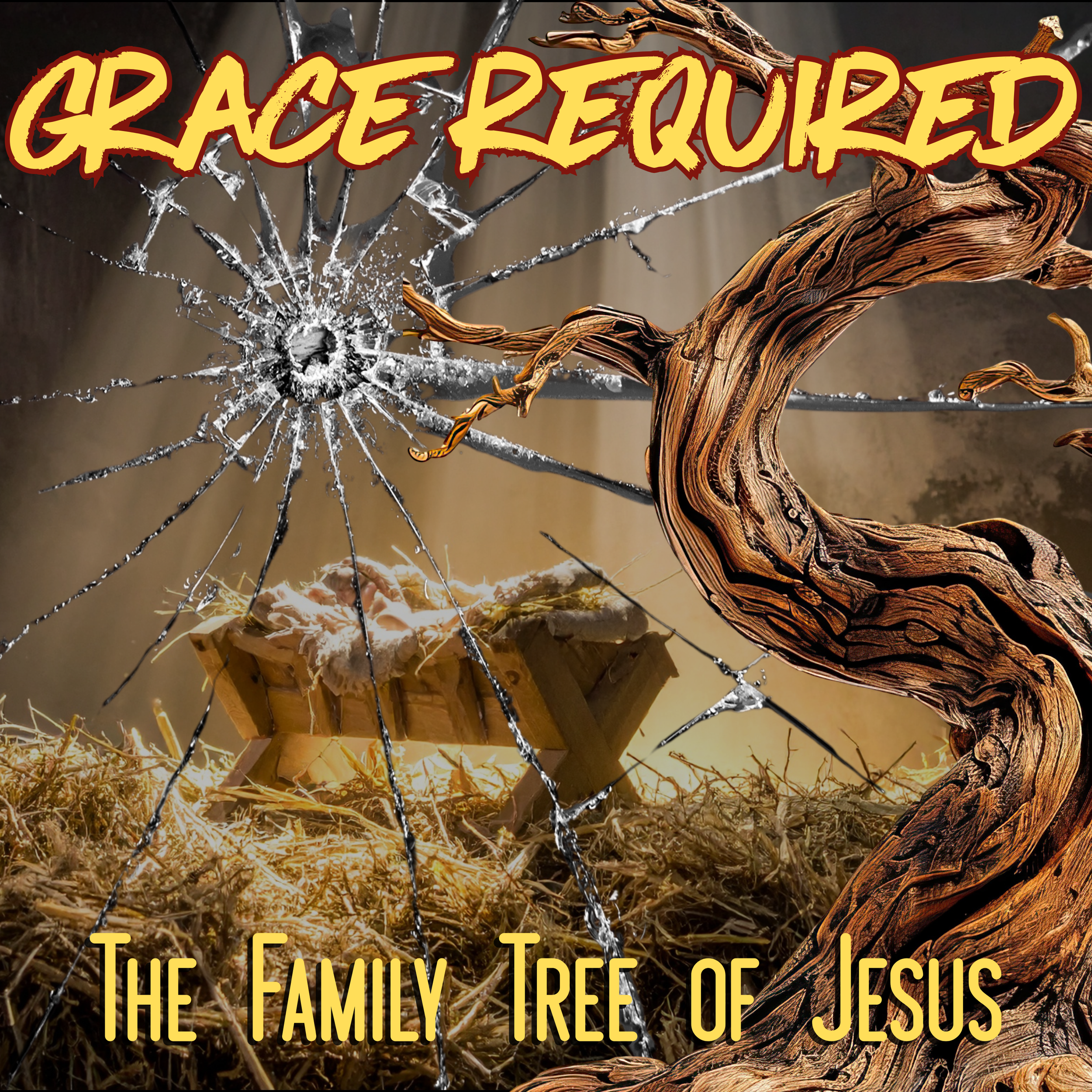
In our Advent series "Grace Required: The Family Tree of Jesus" we will consider David & Bathsheba. The setting is one of the highpoints in the history of Israel, the reigns of King David and his son, Solomon. But the scene is one of dismal failure and shame. Bathsheba is caught in the middle of the struggle. At the beginning of the story, she's laregely the victim. Towards the end of the story, she rises above her circumstances and has a positive influence. She becomes active in redeeming the kingship in Israel for one more generation. Through her dark ordeal, she becomes a light. She probably would not have chosen what happened. But God was at work graciously preserving his people until a better, different King would come. We are not just victims of the evil around us. By God's grace in our lives, He may still do something special with our lives, if we rely on Him and show up when needed.
Rahab - A Person with a Past
This Advent our theme is "Grace Required: the Family Tree of Jesus." We are looking at the stories of the people who make up the family tree of the Lord Jesus. This week: a Canaanite prostitute in the city of Jericho named Rahab. You never know where a new believer may come from. But you will come to recognize them by the shape of their faith. Rahab was an unclean person with a soiled past. She was afraid of the God of Israel and his people. That fear matured into faith and she married into the community of Israel. Jesus came at Christmas so that he might cover over our shame, deliver us into his love and give us peace and joy, as a gift. All this, only when we believe. If you are hungry for the grace of God, "Come and get it!"
The Family Tree of Jesus
This Sunday we will focus on Advent in our teaching series entitled "Grace Required: the Family Tree of Jesus." We will see why the coming of Jesus to be born to redeem was so much more than a "Hallmark Moment." It was absolutely necessary if there was ever a hope for the world We will consider some of the special names singled out in the genealogy of Jesus Christ. This week we will look at the life of Tamar & Judah in Genesis 38, talk about dysfunctional. If ever there was a family that needed grace, it was the family of Jacob/Israel. It becomes abundantly clear, even among the people who know the One True God, that they were desperate for the mercy, grace and kindness of God. If you are not a Hallmark Christian, from a Hallmark family with a Hallmark life, then you are just the kind of person Jesus came for...grace required. Join us this Advent to see why the hope of the good news is so necessary.
Deep Connections
After this Sunday, I will pause our series "Your Best Life Ever Now!" for Advent. But this week we will look once more at Philippians in 2025. We gain a window into Paul's personal relationships and how relationships between believers were fostered and treasured in the New Testament time. There were deep and meaningful friendships, some even inseparable. They made generous sacrifices for one another: traveling, giving, caring, learning and suffering together. News and prayers were treasured gifts in the days of foot travel. Surely one of the reasons Paul stood firm as a prisoner was because of good friends. We will consider what the situation was like for them and the shape of Christian friendship. Next week we will begin our Advent series "Grace Required: The Family Tree of Jesus."
Working Out Your Salvation
This Sunday we continue in our series, "Your Best Life Ever Now." Have you ever received a gift that you absolutely loved? What did you do with it? Most likely you opened it up and started enjoying it in whatever way it was meant to be enjoyed. God has given us an infinite gift. It is called salvation. And we are invited to open it and enjoy it for the rest of our lives. Paul tells us in Philippians to "Work out your salvation." It is a beautiful perspective on the all new life and relationship that God has given us. We will consider what this means, what it looks like and the results it brings.
Have This Mind
In our series "Your Best Life Ever Now," we arrive at Philippians 2:5-11. It is one of the most beautiful and profound descriptions of who Jesus is and what he chose to do for us. It also describes how God the Father honors what his Son went through for us. It starts in heaven, comes down to all the ugliness of the earth, and returns to the heavens. This is what our Savior did, what he chose to do. What kind of God humbles himself like that? He's a God of lavish love, unthinkable authority, and unimaginable glory. Jesus lets go of all that was his, empties himself, humbles himself, and dies on a cross, for us. We're told that we should "have the mind of Christ." God intends to help us with this.